Home › Depreciation & CCA schedule
US & CanadaRental property depreciation & CCA schedule (US & Canada)
Stop guessing your depreciation. A rental property depreciation schedule and CCA calculator for landlords and real estate investors in the US and Canada that works in Excel and Google Sheets. List each building, improvement and appliance once and it works out this year's deduction, what's left to claim and a multi-year schedule: MACRS depreciation for Schedule E (US) or capital cost allowance by class for Form T776 (Canada). Switch country with one dropdown. Built for up to 10 properties, 100 US assets, 100 Canadian assets and 20 CCA classes, with the IRS and CRA tables already built in.
Instant digital download (.xlsx). No macros, no subscription.
What you get
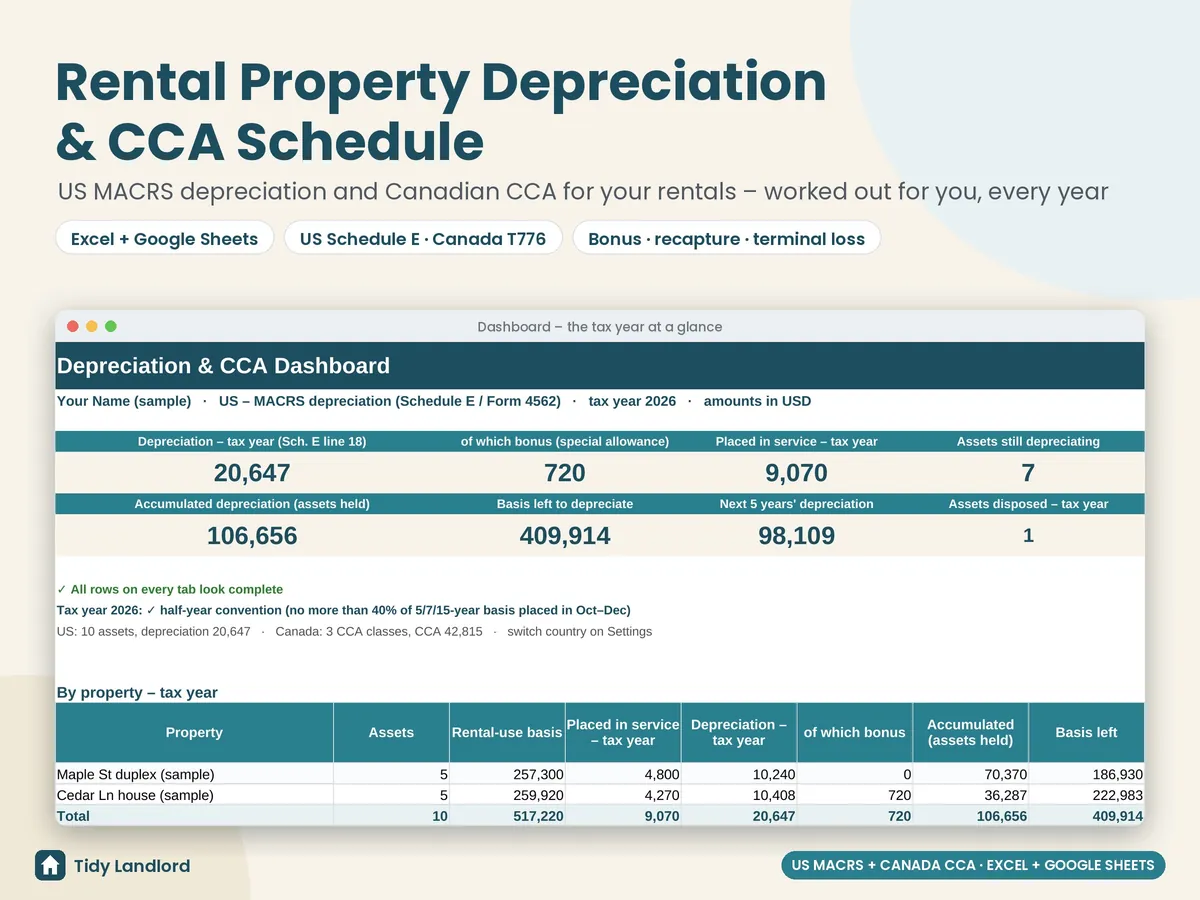
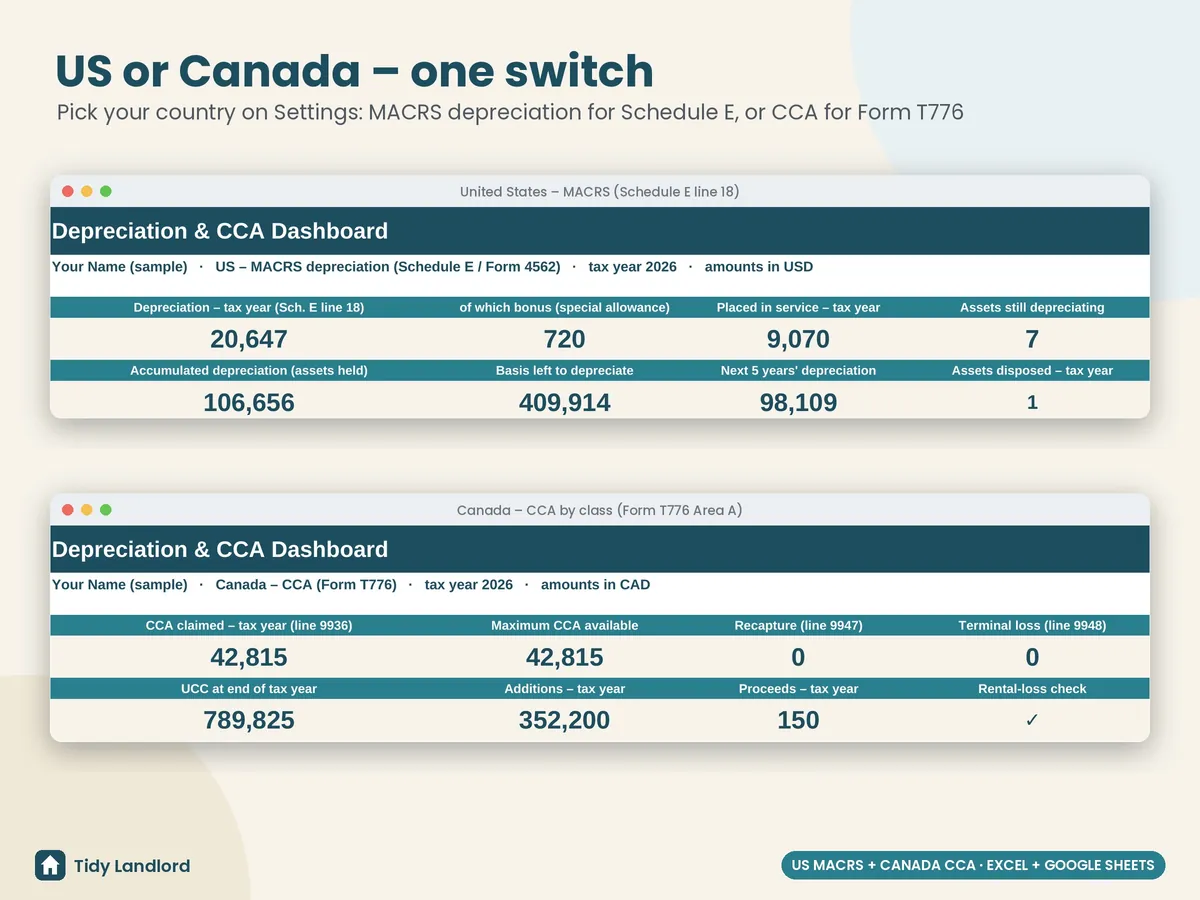
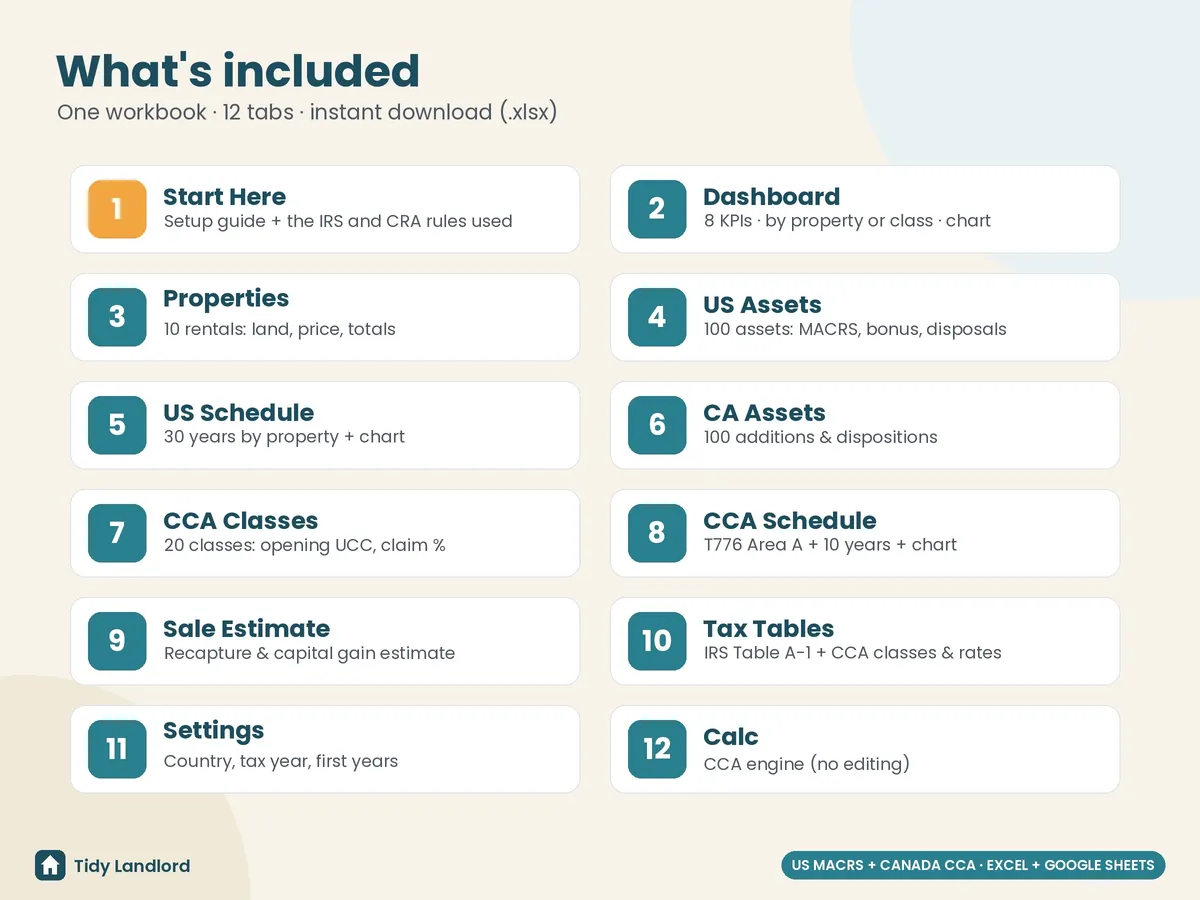
- A dashboard with the tax year at a glance for the country you pick. US: depreciation for Schedule E line 18, bonus depreciation, placed in service this year, assets still depreciating, accumulated depreciation, basis left, the next 5 years and disposals. Canada: CCA claimed (line 9936), the maximum available, recapture (line 9947), terminal loss (line 9948), UCC at year-end, additions, proceeds and a rental-loss check. A table by property (US) or by CCA class (Canada) and a 10-year chart
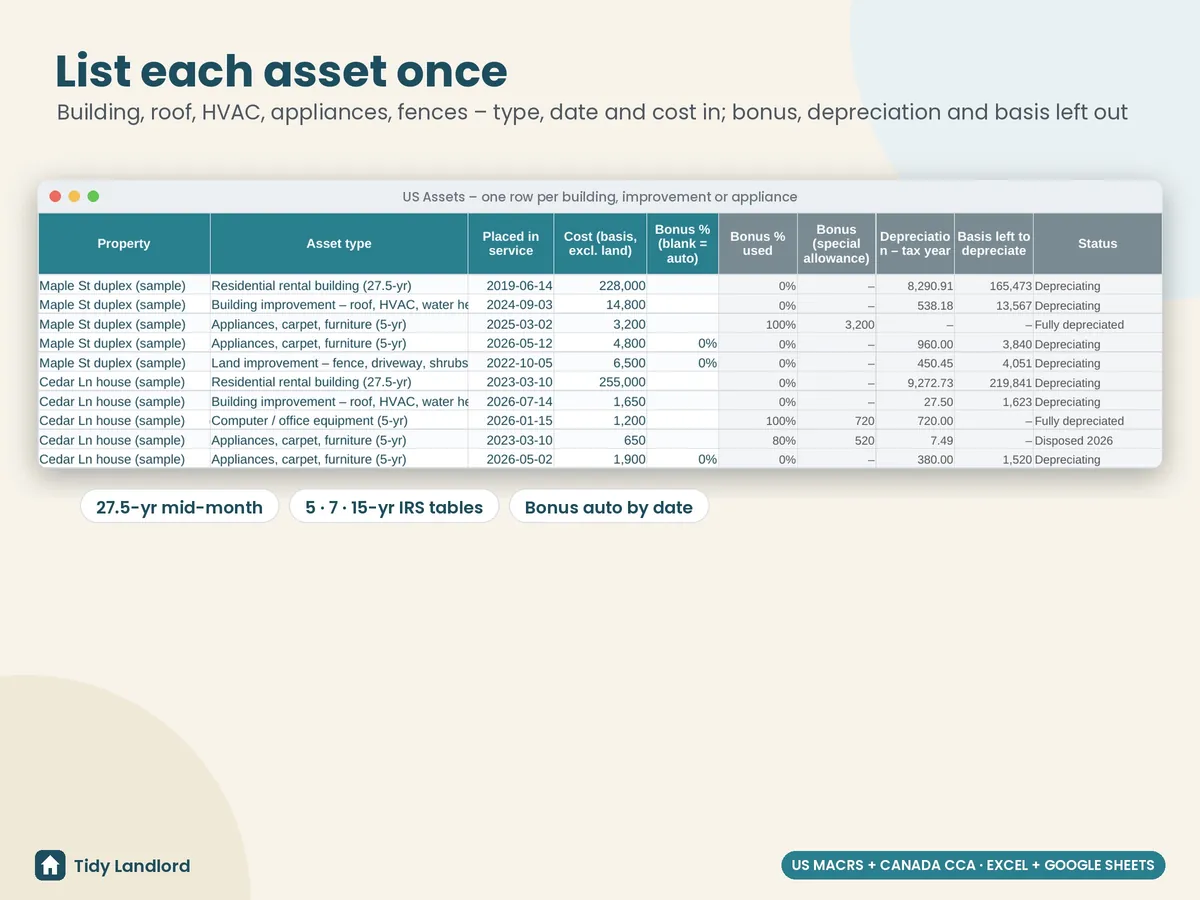
- US assets, one row each: pick the type (rental building, building improvement, appliances / carpet / furniture, computers, office furniture, fences and driveways), enter the date placed in service, the cost and the rental-use %. Bonus depreciation fills in automatically by date (or type your own %, or 0% if you elected out). Depreciation this year, accumulated, basis left and a status are calculated; add a disposed date when you sell, scrap or replace it
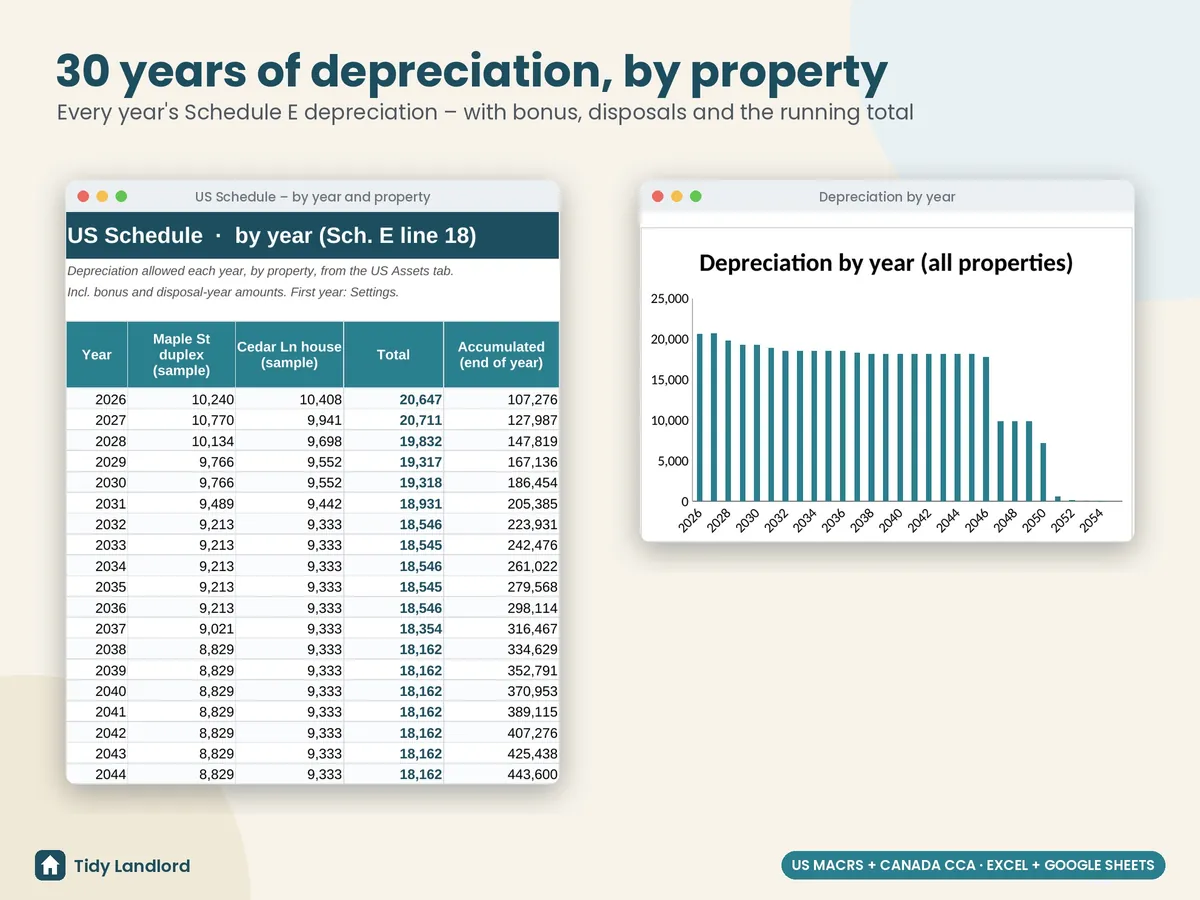
- A US schedule with depreciation for each of the next 30 years by property, with the total, the running accumulated amount and a chart
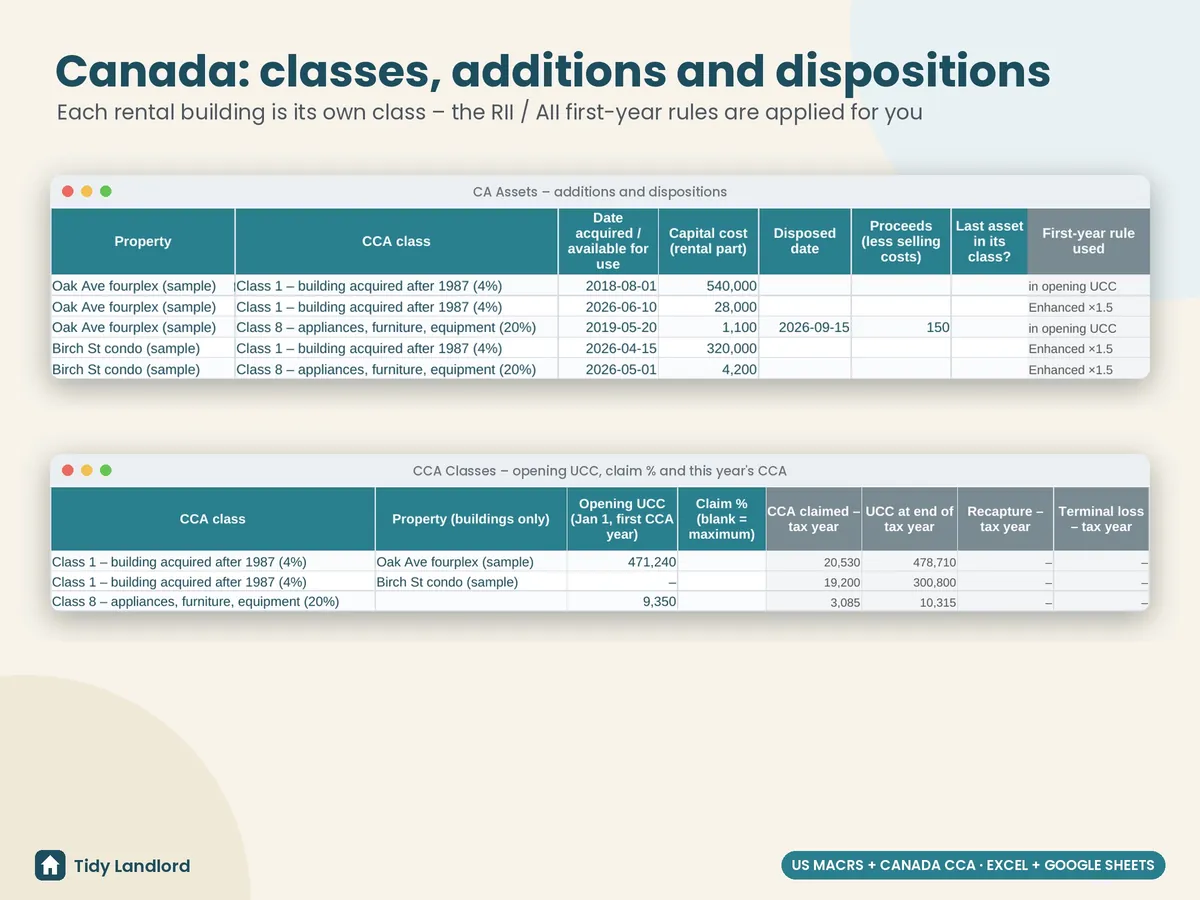
- Canadian assets: additions and dispositions with class, date acquired, capital cost, disposed date and proceeds. The first-year rule (half-year rule or the accelerated AII / RII allowance) is applied automatically, with an override
- CCA classes, one row per class with its opening UCC from last year's T776; each rental building is its own class, Class 8 and the other equipment classes are pooled. Claim less than the maximum with a claim % per class
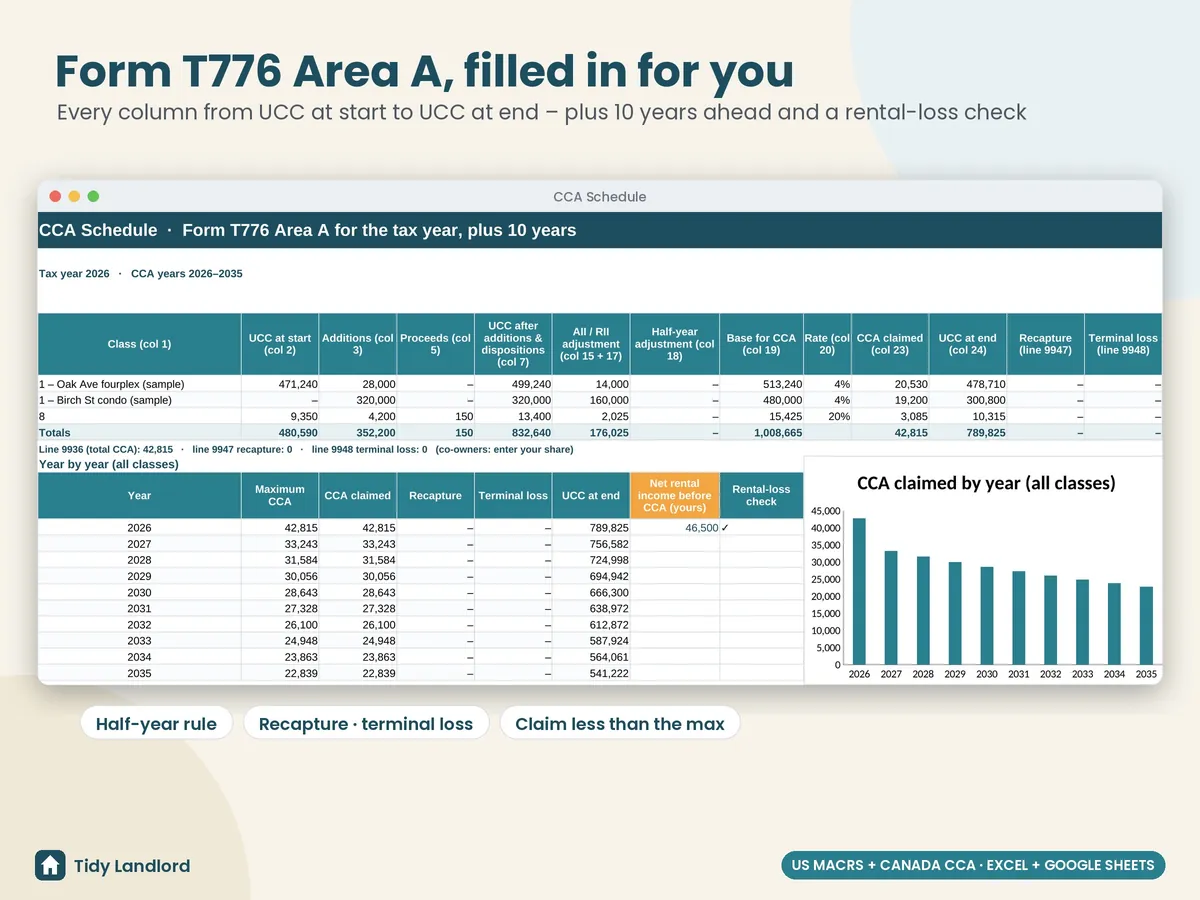
- A CCA schedule with Form T776 Area A filled in: UCC at start, additions, proceeds, UCC after additions and dispositions, the AII / RII and half-year adjustments, base for CCA, rate, CCA, UCC at end, recapture and terminal loss, then 10 years ahead with a check that CCA doesn't create a rental loss, and a chart
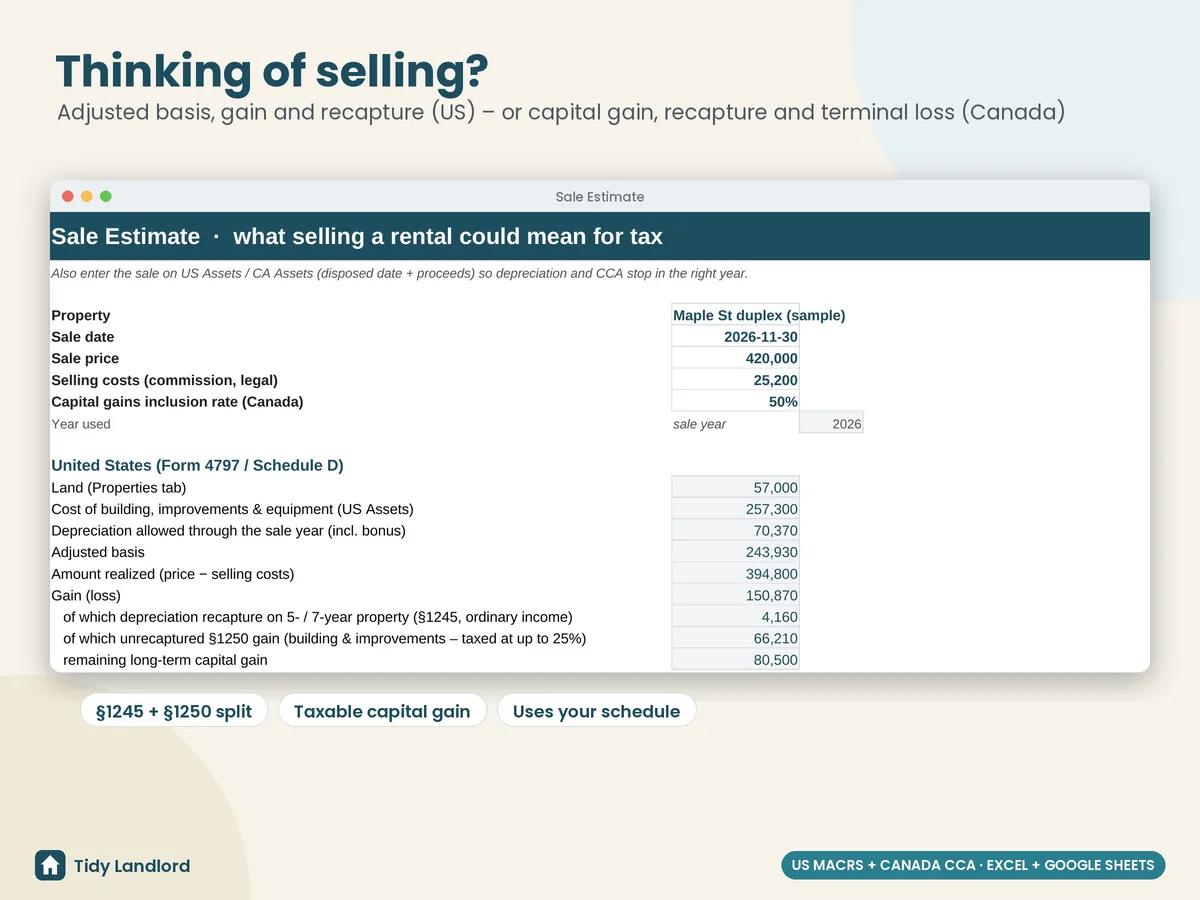
- A sale estimate: pick a property, sale date, price and selling costs. US: adjusted basis, gain, depreciation recapture on 5- and 7-year property, unrecaptured section 1250 gain and the remaining capital gain. Canada: adjusted cost base, capital gain, taxable capital gain, recapture and terminal loss
- Tax tables: IRS Publication 946 Table A-1 (5, 7 and 15-year, half-year convention), the recovery periods from Publication 527 and the CCA classes and rates most used for rentals (CRA guide T4036)
- Check columns that flag missing properties, unknown asset types or classes, text in date and number cells, bad percentages, disposals before purchase and duplicate classes; the dashboard counts them for you
- A Start Here guide in plain English with the IRS and CRA rules used, to set up in about 15–20 minutes
Details
- US: MACRS GDS, 27.5-year straight line with the mid-month convention for buildings and improvements, IRS table percentages (half-year convention) for 5-, 7- and 15-year property, bonus depreciation, rental-use % and disposals; a warning when the mid-quarter convention may apply
- Canada: CCA by class with the half-year rule, the accelerated investment incentive (AII) and the proposed RII enhanced allowance (1.5 × the normal first-year CCA), recapture, terminal loss, a claim % per class and the rental-loss check
- Up to 10 properties, 100 US assets, 100 Canadian assets and 20 CCA classes; works with any currency label
- Excel 2010+ and Google Sheets, no macros, no add-ons, no subscription
- Tested formula by formula against an independent model (IRS and CRA worked examples, bonus boundary dates, disposals, recapture, terminal loss, cleared data and edge cases), in LibreOffice and live in Google Sheets
- Not tax software: it doesn't file anything, and the numbers are only as good as what you enter
Screenshots
How it works
- Buy on Etsy and download the .xlsx file.
- Open it in Excel, or upload it to Google Drive and choose File → Save as Google Sheets.
- Pick US or Canada and the tax year on Settings, delete the clearly marked sample data, add your properties, then list your assets (US) or your classes and this year's additions (Canada).
Free guide: Rental property tax deductions checklist
This is a record-keeping and estimating tool, not tax, legal or accounting advice. It covers the common cases only: not ADS, the mid-quarter convention (it warns you), section 179, listed property limits, AMT, partial dispositions, short tax years, co-ownership splits or state rules. US: the recovery periods follow IRS Publication 527 (residential rental property and its improvements 27.5 years; appliances, carpets and furniture used in residential rental property 5 years; office furniture 7; fences and driveways 15) and the percentages follow IRS Publication 946 Table A-1. The automatic bonus percentage assumes you acquired the asset in the year you placed it in service: 100% for qualified property acquired and placed in service after January 19, 2025 (the 100% special depreciation allowance restored by the 2025 law), the phase-down rates before that, so check your own dates and elections. Canada: CCA follows CRA guide T4036 (Rev. 25). The RII enhanced allowance (2025–2029) and the 10% rate for new purpose-built rentals are proposed changes in that guide, so check that they are law before you file. The Sale Estimate uses a capital gains inclusion rate of 50% (editable). Rules change and depend on your situation, so please check the current IRS or CRA guidance, or ask a tax professional, before you file. It was designed with the help of AI tools, then reviewed and tested before release.