Home › Property manager multi-unit workbook
Property managersProperty manager multi-unit rent & expense workbook
Run your whole rental portfolio from one file, in a property manager workbook for multi-unit buildings and multiple owners that works in Excel and Google Sheets. For property managers, co-hosts for long-term rentals and landlords who manage units for family or clients, in the US, Canada or anywhere else (the currency is just a label). Built for up to 10 properties, 50 units and 10 owners or clients.
Instant digital download (.xlsx). No macros, no subscription.
What you get
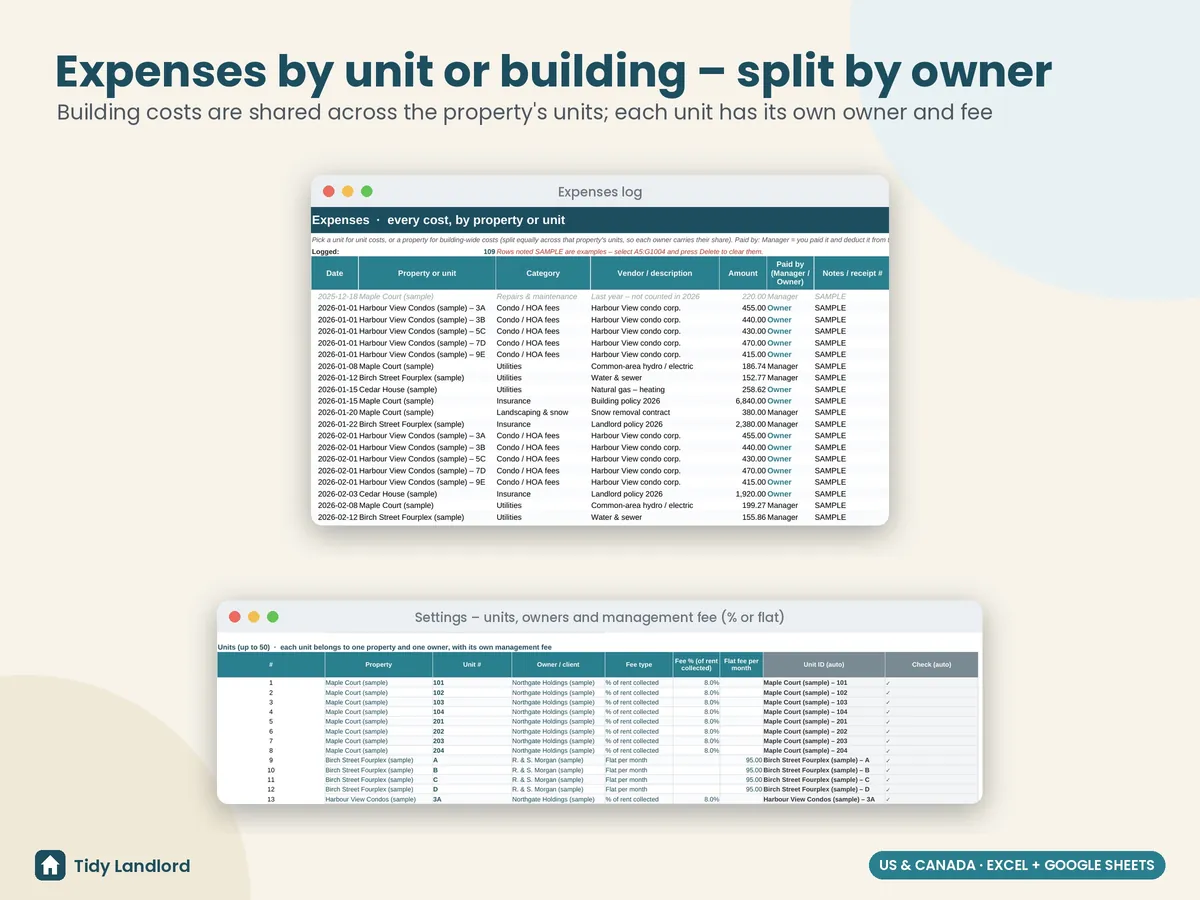
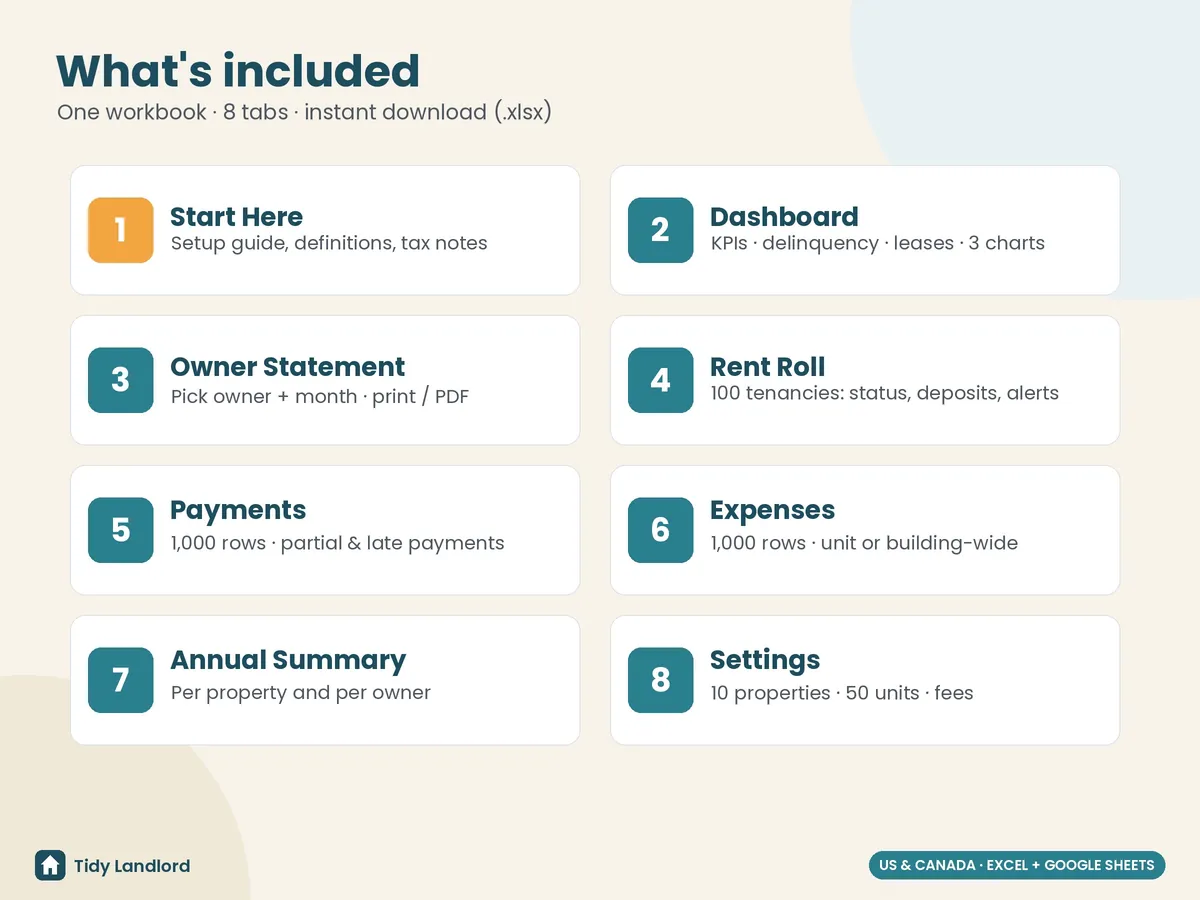
- Settings for your properties, owners and units in one place: each unit belongs to a property and an owner and has its own management fee (a % of rent collected, a flat monthly fee, or none). Mixed fee deals for one owner are fine
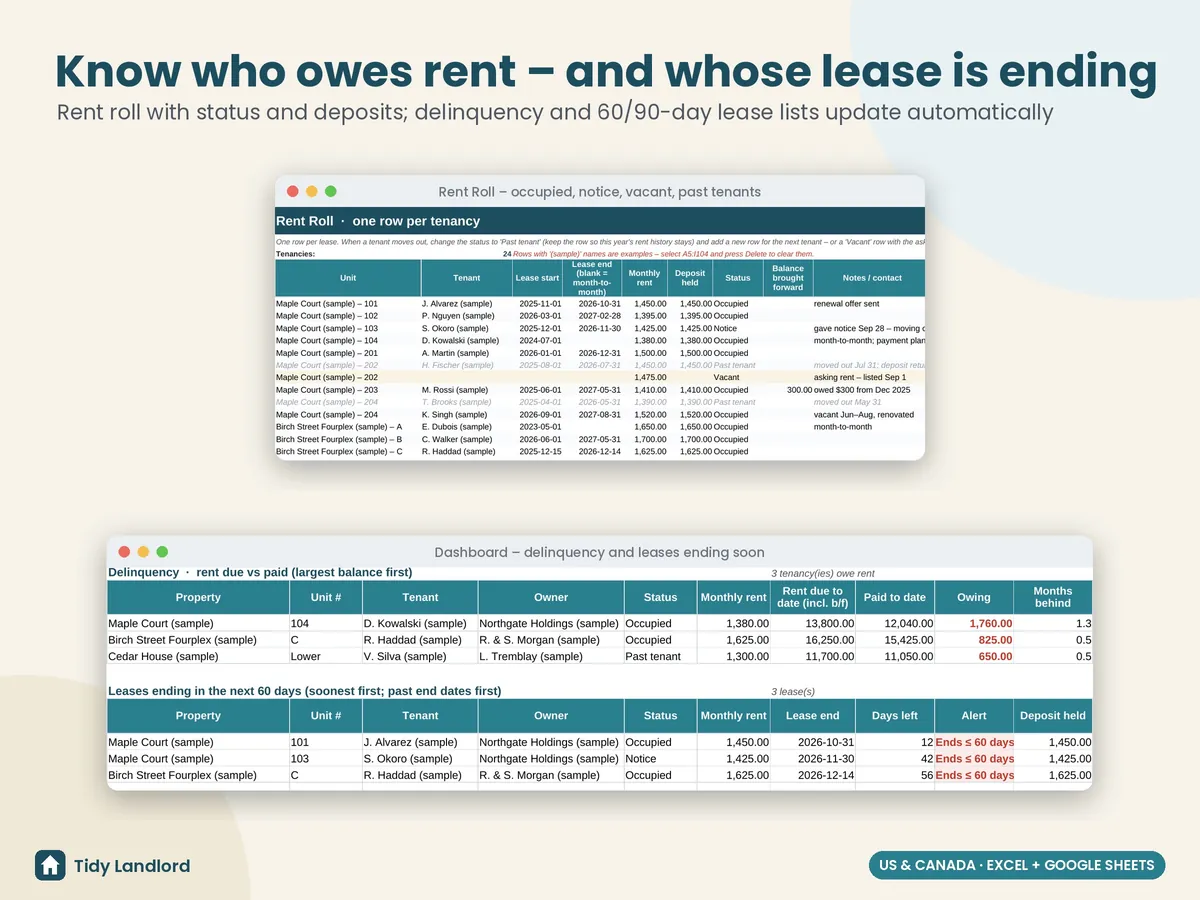
- A rent roll for 100 tenancies: tenant, lease start and end, monthly rent, deposit held, status (Occupied, Notice, Vacant, Past tenant) and a balance brought forward; rent due to date, paid to date, amount owing and lease alerts are calculated for you
- A payments log with 1,000 rows: date, unit, amount, method and the period month it pays. Partial payments, late payments and prepayments are handled, so a July payment received in August still counts toward July
- An expenses log with 1,000 rows and 15 editable categories, room for 20 (repairs, cleaning & turnover, utilities, insurance, property tax, condo / HOA fees, landscaping & snow and more). Assign a cost to one unit, or to a whole property and it's split equally across that property's units, so each owner carries their share; mark whether you paid it (deducted from the owner's rent) or the owner paid directly
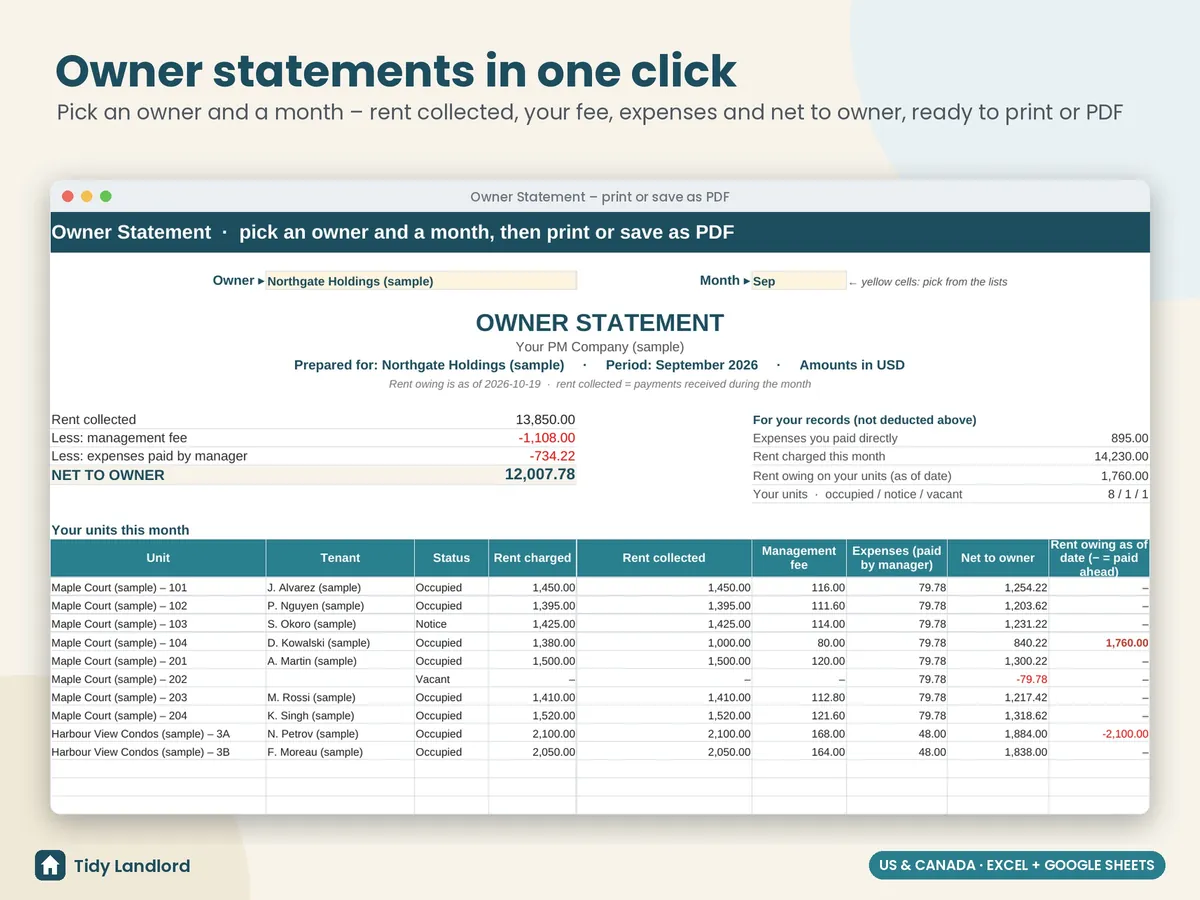
- A printable owner statement: pick an owner and a month to see rent collected, your management fee, expenses you paid, net to owner, a line per unit and every expense line with the owner's share. Print it or save it as PDF and send it
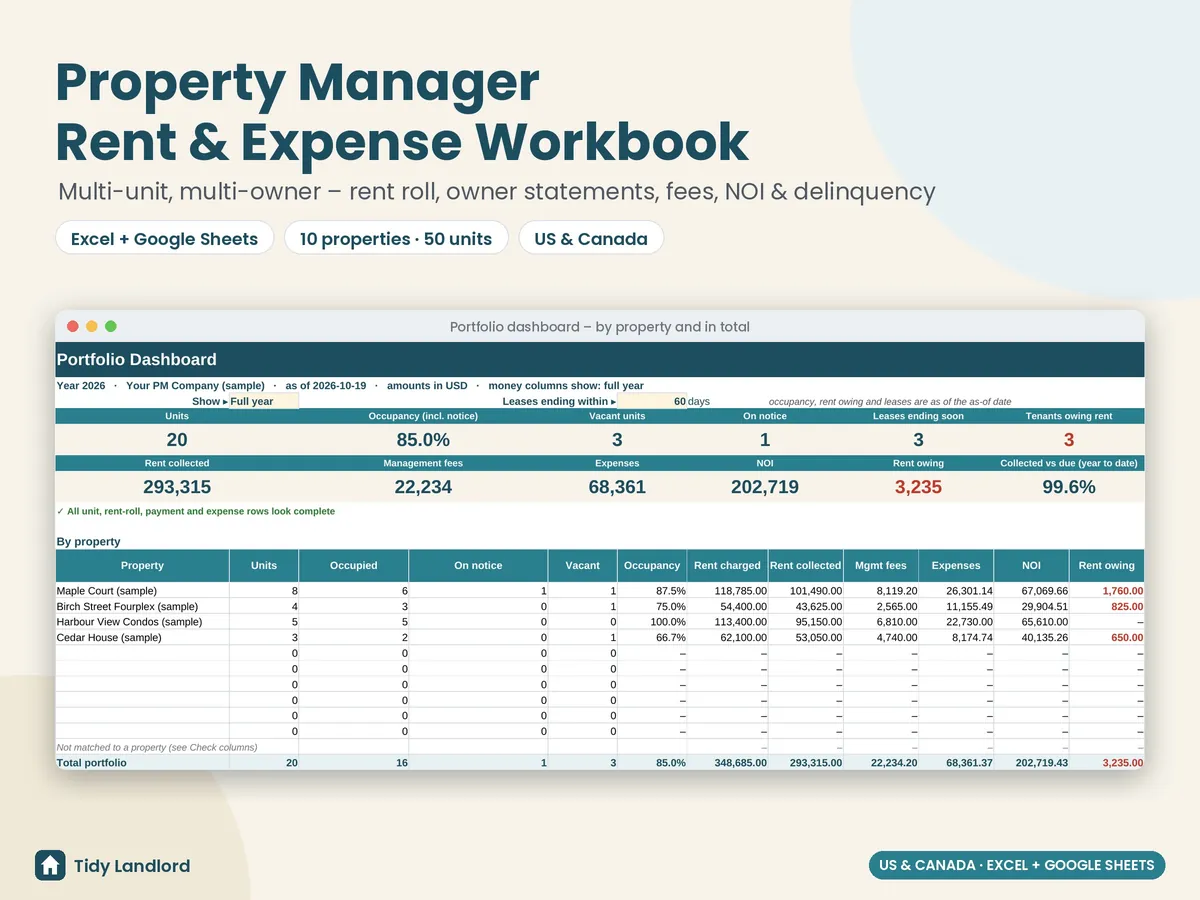
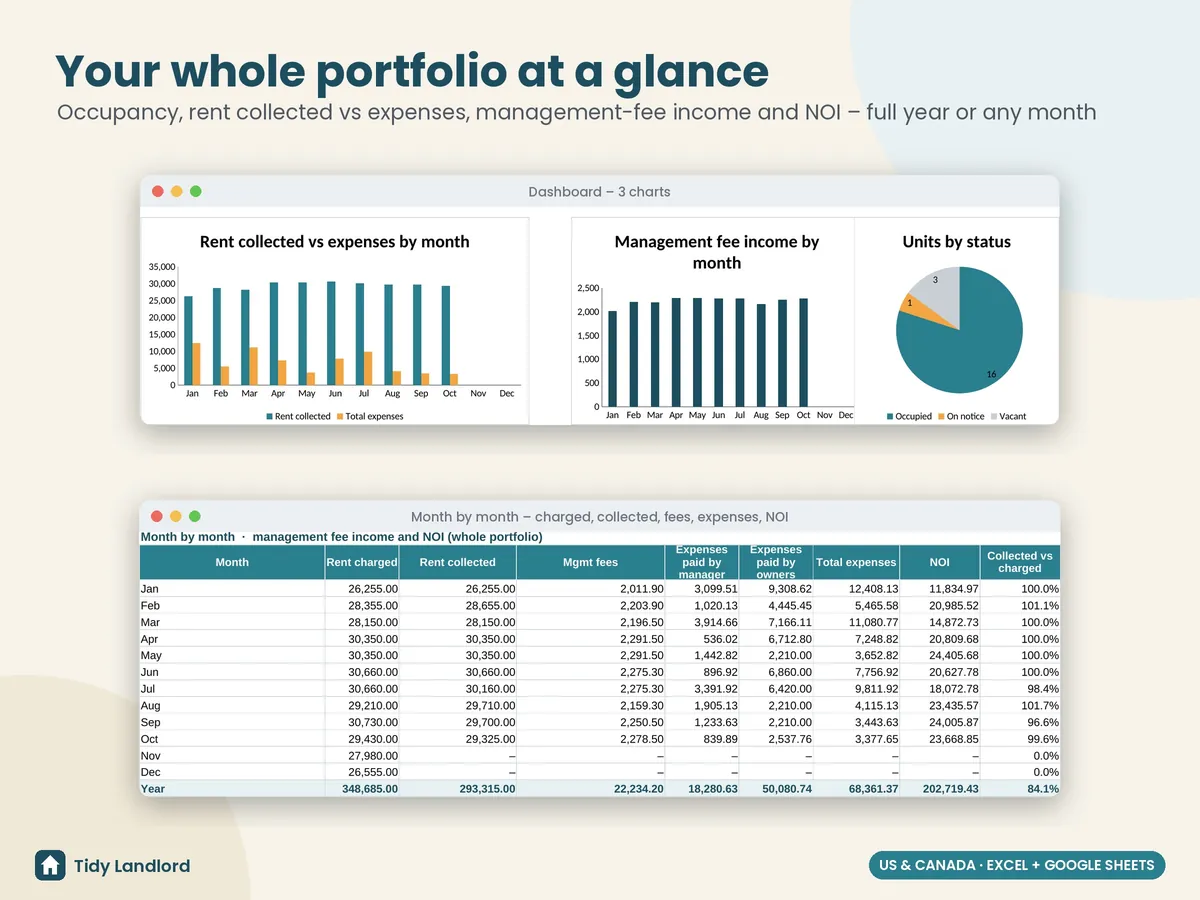
- A portfolio dashboard for the full year or any month: occupancy and vacancy, a delinquency list (rent due vs paid, largest balance first), leases ending in the next 60 or 90 days, income, expenses and NOI per property, your management-fee income by owner and by month, and 3 charts
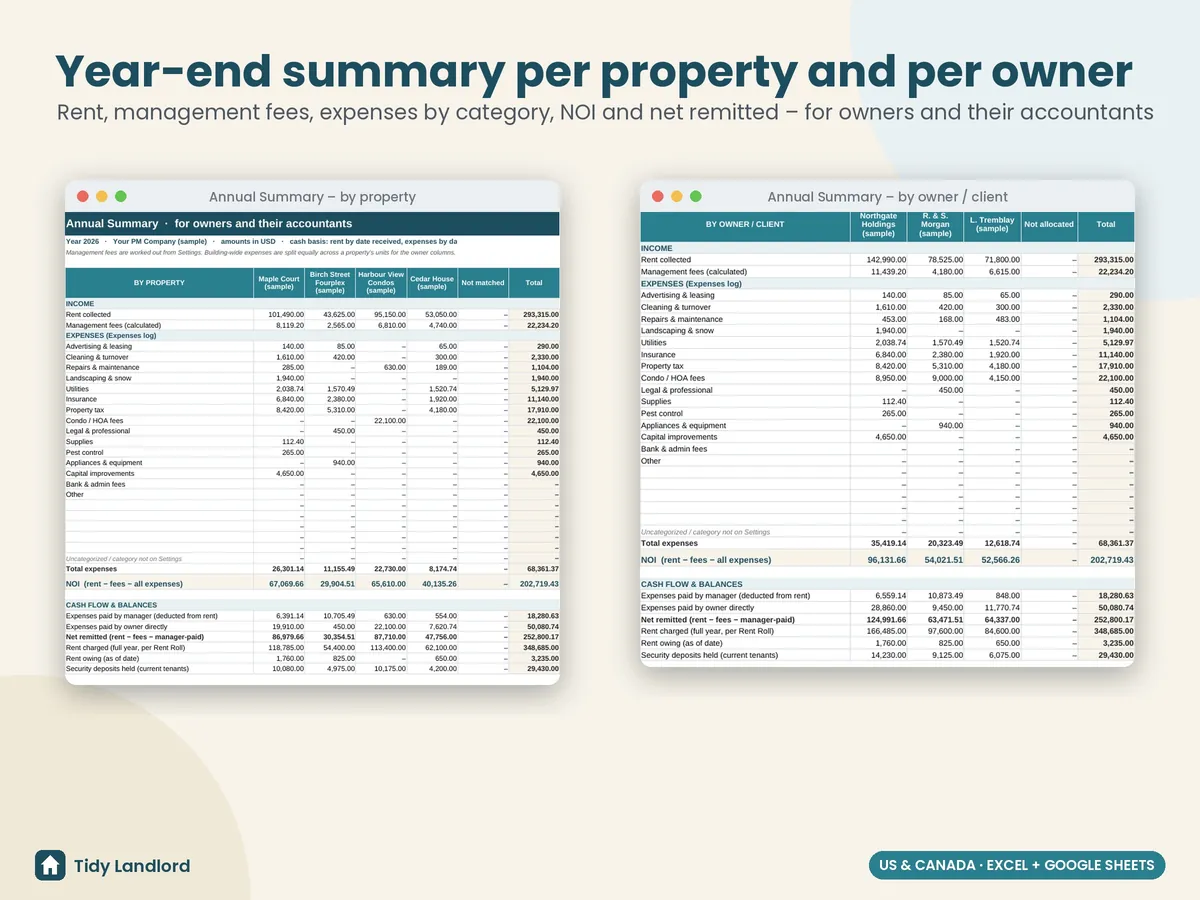
- An annual summary per property and per owner: rent collected, management fees, expenses by category, NOI, net remitted, rent owing and deposits held, for owners and their accountants
- Check columns that flag unknown units, duplicate units, two current tenancies on one unit, overlapping leases, end dates before start dates, payments no lease covers, typos and text typed into number cells
- A Start Here guide with plain-English definitions, to set up in about 15 minutes
Details
- Up to 10 properties, 50 units, 10 owners and 100 tenancies
- 1,000 payments and 1,000 expenses per year file; works with any currency
- Rent is charged for every full or part month of a lease (no proration); flat fees run up to your as-of date and can be switched on or off for vacant units
- Excel 2010+ and Google Sheets, no macros, no add-ons, no subscription
- Tested formula by formula with sample data, empty data, partial payments, vacancies, expiring leases and edge cases, in LibreOffice and live in Google Sheets
- Not property-management software and not connected to any bank or platform
Screenshots
How it works
- Buy on Etsy and download the .xlsx file.
- Open it in Excel, or upload it to Google Drive and choose File → Save as Google Sheets.
- Add your properties, owners and units, delete the clearly marked sample data, and log rent and expenses as they happen.
Free tool: Rent increase calculator
This is a record-keeping tool, not tax, legal or accounting advice. The Annual Summary includes general notes only: US owners generally report rental income and expenses on Schedule E (IRS Publication 527), and the IRS instructions for Form 1099-MISC say a property manager who collects rent for an owner must report the rent paid over to the owner on Form 1099-MISC. Canadian owners generally report rental income on Form T776 (CRA guide T4036), and if an owner is a non-resident of Canada, the CRA says the agent who collects the rent (such as a property manager) generally has to withhold non-resident tax and issue NR4 slips (guide T4061). Thresholds, rates and exceptions change and depend on each situation, and trust-account and licensing rules for property managers differ by state and province. Please check the current IRS or CRA guidance, or ask a tax professional. It was designed with the help of AI tools, then reviewed and tested before release.